
Step out. The trip is logged.
Every trip read from your Tesla, logged as the IRS requires. No dongle. No typing.


Sound familiar?
It’s December 28th. You’re sitting with your calendar, Google Maps, and an empty spreadsheet, guessing what you drove in March.
| date | from | to | miles |
|---|---|---|---|
| 3/3 | office | ??? | 38? |
| 3/4 | ??? | ??? | |
| 3/5 | #REF! | ||
| 3/6 | |||
| 3/9 | ??? | client? | |
See every trip on the map
Odometer reading at both ends, real street addresses.
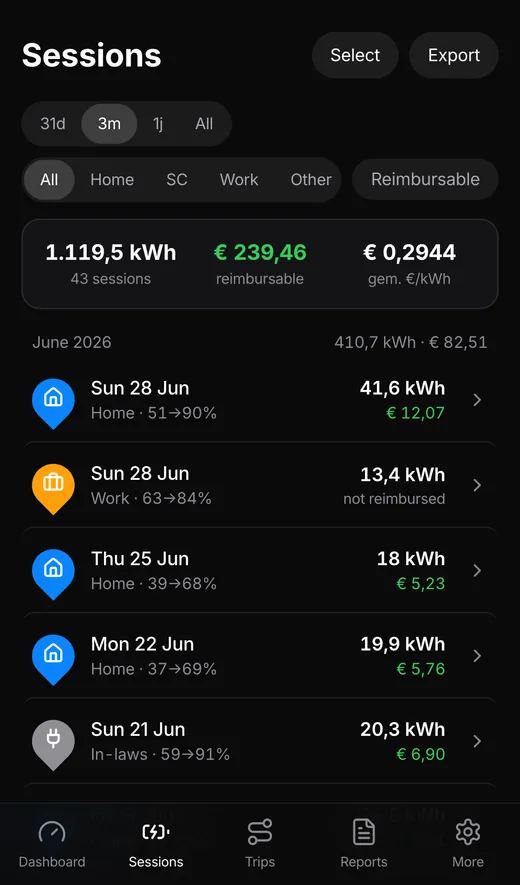
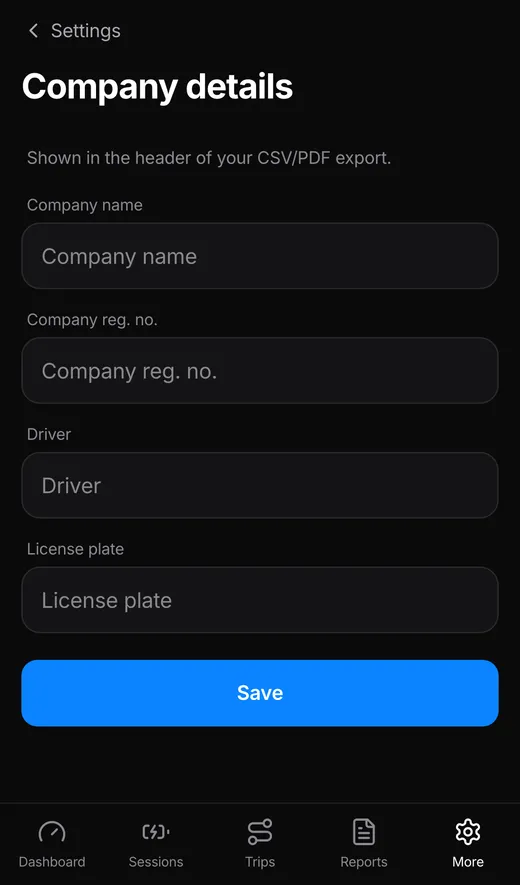
More in the app
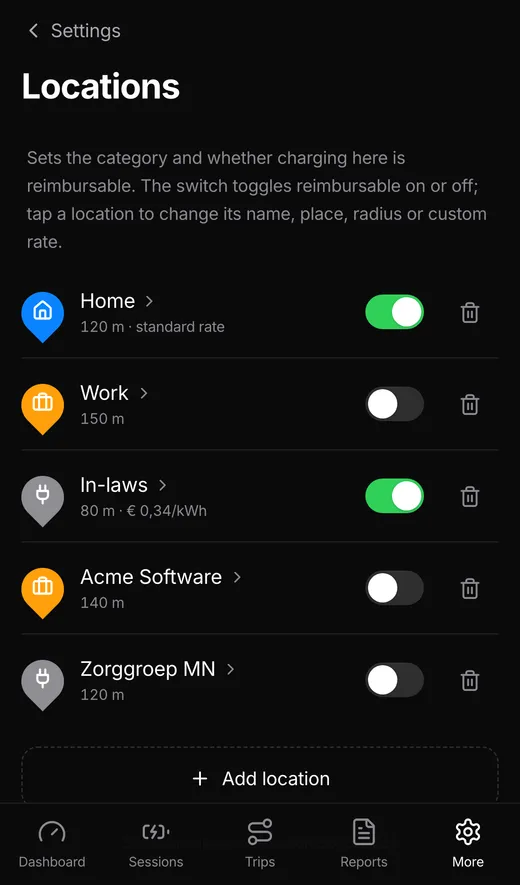
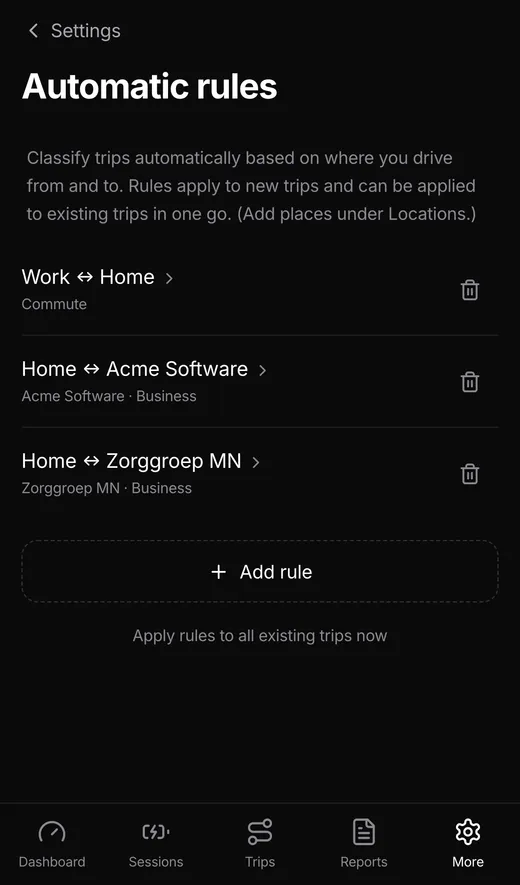
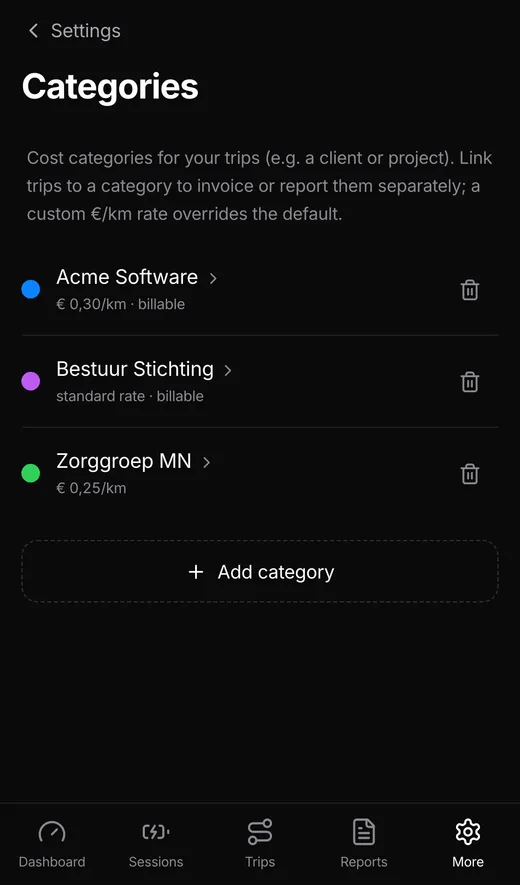
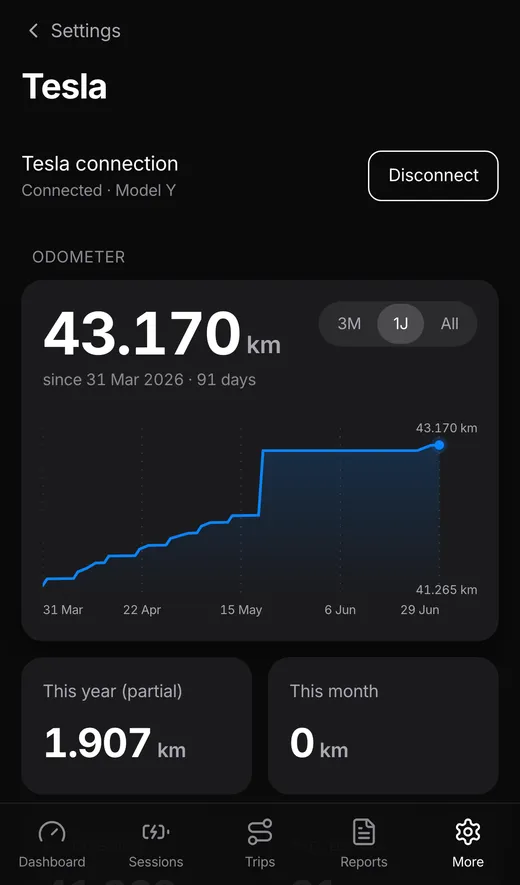
“My CPA got the export in April. That was the whole conversation.”
founder of VoltLogger, on his own mileage log
| date | odo start | odo end | type |
| Jun 24 | 43,025 | 43,070 | business |
| Jun 25 | 43,070 | 43,096 | commute |
| Jun 26 | 43,096 | 43,125 | personal |
What the IRS requires → what VoltLogger does
Ready for the IRS IRS format
2 of 3 run automatically; you tap the last one.
In April you click Export.
The mileage log writes itself.
7-day free trial · then $69/year · no credit card needed
One price. Charging included.
Most mileage trackers cost this much for trips alone, and see none of your charging. Dongles add hardware on top. VoltLogger keeps both records for $69 a year.
- Trips and charging, both records in one app
- Unlimited trips, sessions and exports
- No hardware, no install, no second subscription
- Free for 7 days, no credit card needed
If it’s not for you, email us within 30 days for a full refund. No questions asked.
7-day free trial · no credit card · on the web, iOS and Android · cancel anytime
FAQ
What does an IRS-compliant mileage log need?
Four things per trip: date, mileage, destination, and business purpose, all recorded timely (at or near the time of the trip, not reconstructed at year-end, per IRS Pub 463). VoltLogger captures the first three automatically from the car itself and lets you set the purpose in one tap.
The full requirements → How much is the standard mileage rate in 2026?
The IRS business rate is 76 cents per mile from July 1, 2026, after a midyear increase (72.5 cents applied from January through June), and it explicitly applies to electric vehicles. At 12,000 business miles that is a $9,120 deduction, if your log holds up.
Worked examples → Can I get reimbursed for charging my EV at home?
There is no IRS per-kWh rate for home charging. The safe route is an accountable plan that reimburses at or below the standard mileage rate, which is deemed to substantiate car expenses and covers operating costs including electricity. Knowing your real kWh cost is the foundation either way.
The US rules explained → Do I need an OBD dongle to track Tesla mileage?
No. Your Tesla already measures its odometer, location and charging. VoltLogger reads them through the official Tesla Fleet API: connect your account once and every trip is logged from the car’s own odometer, which is what makes the log defensible.
Why odometer beats GPS → Will it drain my battery or keep the car awake?
No. VoltLogger polls adaptively: frequently while driving or charging, and it backs off when parked so the car sleeps normally. Even if a poll is missed, no miles are lost: the odometer difference reconstructs the trip and your totals always reconcile with the real odometer.
How logging works → What language is the app in?
The app interface is currently Dutch; VoltLogger launched in the Netherlands first. An English version is in the works, and the logging itself (trips, odometer readings, charging sessions, CSV/PDF exports) already works with any Tesla in the US, UK or EU.
See the app →Guides
All guides →Tesla Mileage Log: How to Keep an IRS-Compliant Mileage Tracker in 2026
Keep an IRS-compliant Tesla mileage log automatically: odometer-accurate trips straight from the car, no dongle. $8.99/month or $69/year, free to try.
Read the guide →EV Home Charging Reimbursement: US and UK Rules for 2026
How EV home charging reimbursement works in the US and UK: 2026 IRS and HMRC rates, records and worked examples. VoltLogger logs every kWh, no dongle.
Read the guide →